'/%3e%3crect%20width='1600'%20height='900'%20fill='url(%23dots)'/%3e%3c!--%20ambient%20glows%20--%3e%3ccircle%20cx='1300'%20cy='210'%20r='360'%20fill='url(%23glowOrange)'/%3e%3ccircle%20cx='620'%20cy='700'%20r='320'%20fill='url(%23glowBlue)'/%3e%3c!--%20connecting%20network%20--%3e%3cg%20stroke='%234a90e8'%20fill='none'%20stroke-linecap='round'%3e%3c!--%20main%20flow%20--%3e%3cpath%20d='M170%20640%20L410%20520%20L650%20610%20L880%20430%20L1120%20545%20L1330%20400%20L1500%20545'%20stroke-width='2'%20opacity='0.34'/%3e%3c!--%20cross%20links%20--%3e%3cg%20stroke-width='1.4'%20opacity='0.18'%3e%3cpath%20d='M410%20520%20L880%20430'/%3e%3cpath%20d='M650%20610%20L1120%20545'/%3e%3cpath%20d='M650%20610%20L760%20250'/%3e%3cpath%20d='M760%20250%20L880%20430'/%3e%3cpath%20d='M1120%20545%20L1200%20250'/%3e%3cpath%20d='M1200%20250%20L1330%20400'/%3e%3cpath%20d='M880%20430%20L760%20250'/%3e%3c/g%3e%3c/g%3e%3c!--%20floating%20packets%20--%3e%3cg%20fill='none'%20stroke='%233a83e4'%20stroke-width='1.4'%20opacity='0.22'%3e%3crect%20x='300'%20y='300'%20width='26'%20height='18'%20rx='4'%20transform='rotate(-8%20313%20309)'/%3e%3crect%20x='1000'%20y='700'%20width='26'%20height='18'%20rx='4'%20transform='rotate(6%201013%20709)'/%3e%3crect%20x='1400'%20y='640'%20width='26'%20height='18'%20rx='4'%20transform='rotate(-10%201413%20649)'/%3e%3crect%20x='520'%20y='760'%20width='26'%20height='18'%20rx='4'%20transform='rotate(5%20533%20769)'/%3e%3c/g%3e%3c!--%20nodes%20--%3e%3cg%3e%3c!--%20blue%20nodes:%20halo%20+%20core%20--%3e%3cg%20fill='%233a83e4'%3e%3ccircle%20cx='170'%20cy='640'%20r='15'%20opacity='0.12'/%3e%3ccircle%20cx='170'%20cy='640'%20r='6'/%3e%3ccircle%20cx='410'%20cy='520'%20r='15'%20opacity='0.12'/%3e%3ccircle%20cx='410'%20cy='520'%20r='6'/%3e%3ccircle%20cx='650'%20cy='610'%20r='15'%20opacity='0.12'/%3e%3ccircle%20cx='650'%20cy='610'%20r='6'/%3e%3ccircle%20cx='1120'%20cy='545'%20r='15'%20opacity='0.12'/%3e%3ccircle%20cx='1120'%20cy='545'%20r='6'/%3e%3ccircle%20cx='1500'%20cy='545'%20r='15'%20opacity='0.12'/%3e%3ccircle%20cx='1500'%20cy='545'%20r='6'/%3e%3ccircle%20cx='760'%20cy='250'%20r='13'%20opacity='0.12'/%3e%3ccircle%20cx='760'%20cy='250'%20r='5'/%3e%3ccircle%20cx='1200'%20cy='250'%20r='13'%20opacity='0.12'/%3e%3ccircle%20cx='1200'%20cy='250'%20r='5'/%3e%3c/g%3e%3c!--%20orange%20highlight%20nodes%20--%3e%3cg%3e%3ccircle%20cx='880'%20cy='430'%20r='26'%20fill='%23ff7a1a'%20opacity='0.16'/%3e%3ccircle%20cx='880'%20cy='430'%20r='14'%20fill='none'%20stroke='%23ff8a3d'%20stroke-width='1.5'%20opacity='0.5'/%3e%3ccircle%20cx='880'%20cy='430'%20r='8'%20fill='%23ff6a00'/%3e%3ccircle%20cx='1330'%20cy='400'%20r='26'%20fill='%23ff7a1a'%20opacity='0.16'/%3e%3ccircle%20cx='1330'%20cy='400'%20r='14'%20fill='none'%20stroke='%23ff8a3d'%20stroke-width='1.5'%20opacity='0.5'/%3e%3ccircle%20cx='1330'%20cy='400'%20r='8'%20fill='%23ff6a00'/%3e%3c/g%3e%3c/g%3e%3c/svg%3e)
Intelligent Software for the Modern Supply Chain
TriSys is a supply chain technology company focused on helping organizations improve visibility, decision-making and operational efficiency through AI and intelligent software solutions.
While our expertise began in Agriculture, today we also deliver solutions for Warehousing and other supply chain operations. Our approach is built around three principles—Know, Bridge and Intelligize—helping businesses connect information, eliminate silos and make smarter decisions.
Who We Are
Next-Gen AI Company
We are a next-generation digital transformation company specializing in AI-powered solutions for grain companies in the USA.
Seamless AI Integration
We partner with grain businesses to modernize operations through seamless AI integration, enabling them to operate with greater speed, visibility, and control.
U.S. Grain Market Expertise
With deep understanding of U.S. grain operations, we help companies navigate complex supply chains and operational challenges across elevators, rail, terminals,and export workflows.
Delivering Digital Delight to New-Age Global Enterprises
Our Core Philosophy
AI With No Disruption
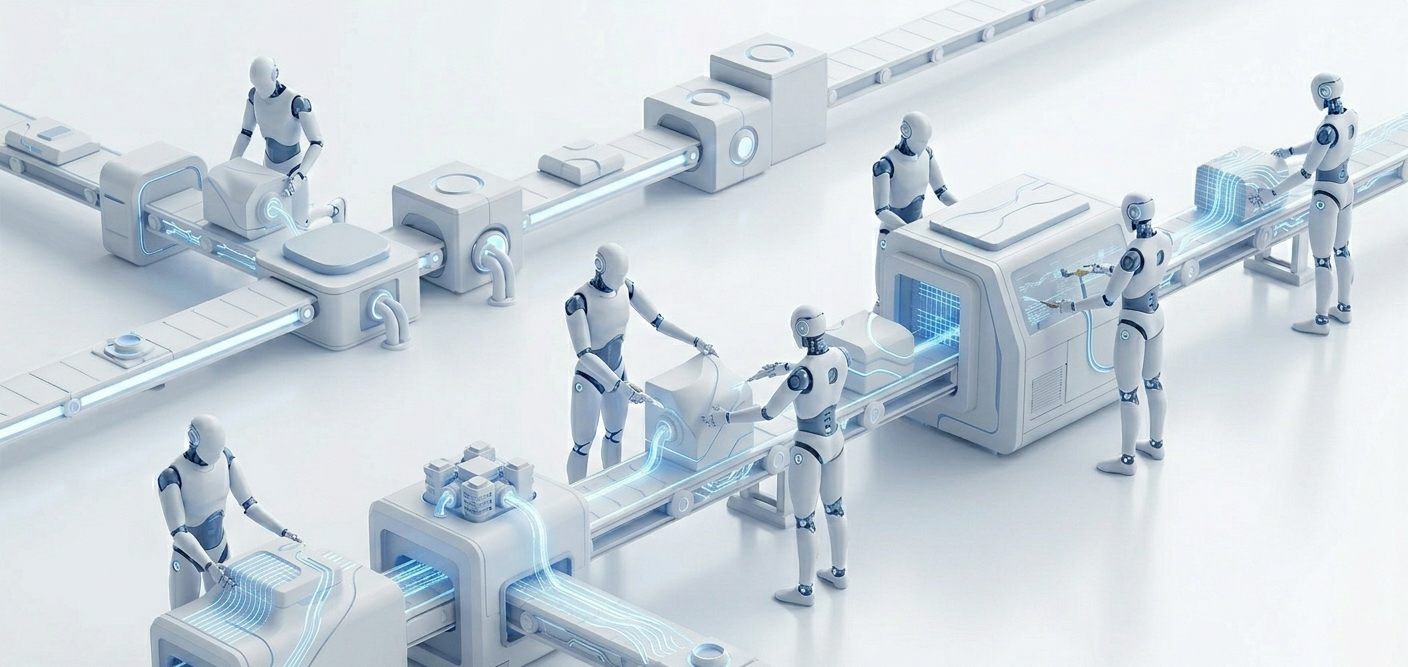
We take a fundamentally different approach by embedding AI into your current ERP,TMS, and operational systems, enhancing what already exists.
- No disruption to ongoing operations
- No heavy change management
- Immediate usability and faster ROI
AI becomes a natural extension of your workflows.
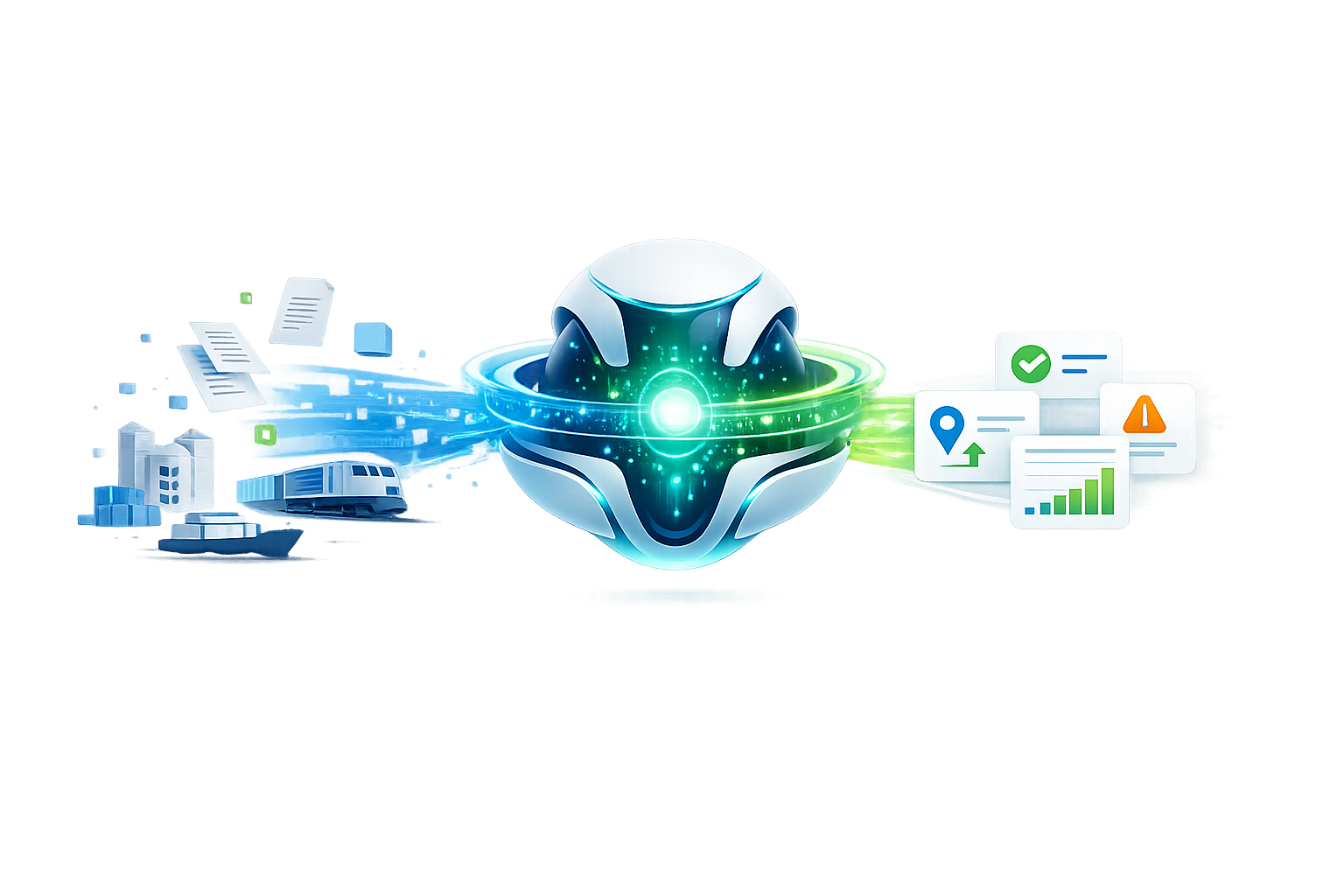
Real-Time Intelligence From Your Data
Grain companies generate massive amounts of operational and logistics data, but much of it remains delayed or underutilized. We convert this data into real-time intelligence, enabling:
- Instant visibility into shipments and operations
- Faster response to disruptions
- Data-backed decision-making across teams
- Decisions that took hours now happen in minutes
Continuous Cost Reduction, Not Just Automation
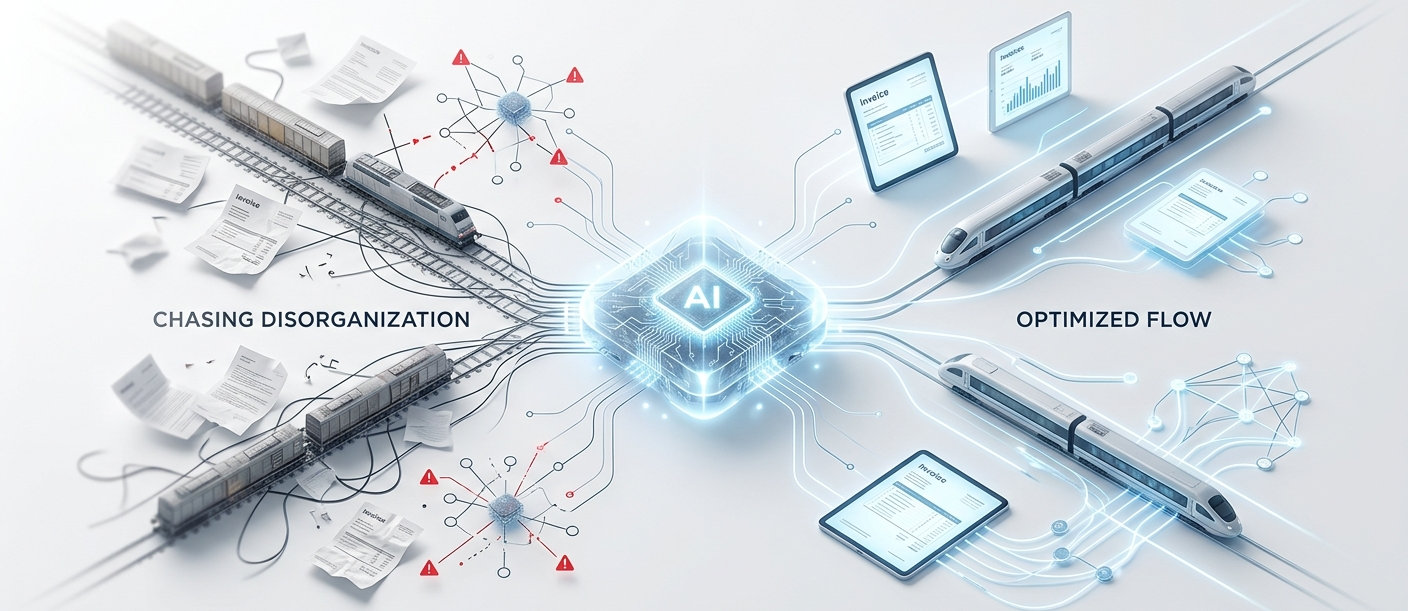
A significant portion of losses in grain operations comes from inefficiencies, delays, and manual processes. Our AI layer is designed to systematically reduce:
- Dwell time and idle railcars
- Manual errors and rework
- Delayed invoicing and cash cycles
- Information gaps across stakeholders
The focus is not just automation, but continuous cost optimization.