Most grain companies treat the bin chart as a simple inventory log. The best ones use it to predict tomorrow’s bottlenecks, protect today’s sales commitments, and keep every department working off the same truth.
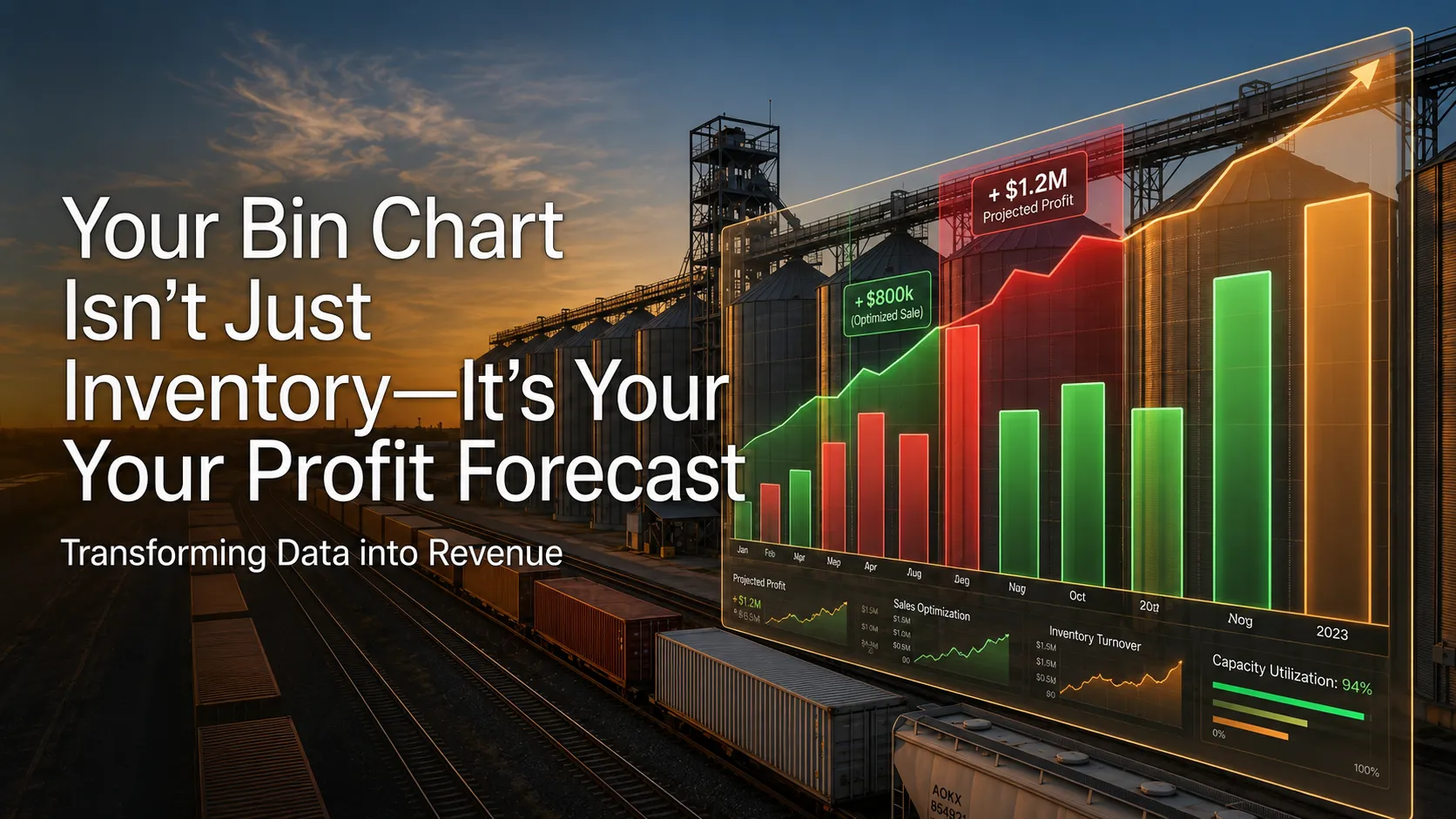
What if your next profitable decision is already hidden in your bin chart?
Every grain company has a bin chart.
Ask an elevator operator what it does, and the answer is simple: “It tells us what’s in each bin.”
But ask a merchant, a logistics manager, or a VP of Operations, and the answer should be very different.
Because a bin chart isn’t just a record of inventory—it’s one of the most important decision-making tools in the entire grain business.
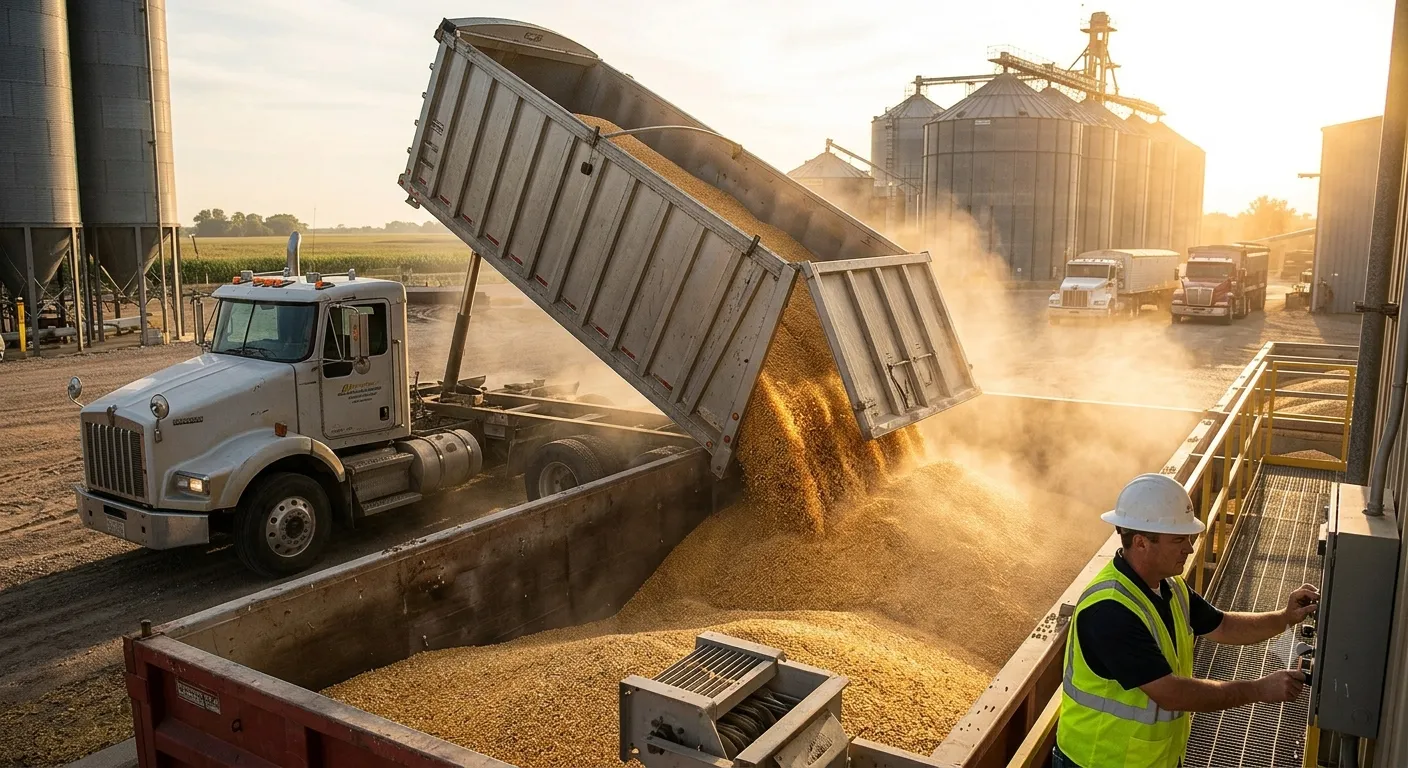
Picture a typical harvest morning. Farmers are arriving with truckloads of grain. Inbound tickets are being created. Grain is moving into different bins based on commodity, grade, and available space. At the same time, merchants are committing grain to customers, the logistics team is trying to secure railcars and barges, and operations is deciding which bins should be emptied first to make room for incoming deliveries.
Everyone is making decisions independently, yet they are all relying on the same information.
The bin chart.
Now imagine that the information is incomplete, delayed, or inaccurate.
A merchant may sell grain that isn’t actually available. Logistics may reserve railcars for grain that won’t be ready to load. Operations may discover too late that a critical bin has reached capacity, forcing grain into temporary stockpiles. Customer shipments get delayed, trucks wait longer at the elevator, and suddenly a small inventory mismatch has become an operational problem affecting multiple departments.
That’s why leading grain companies don’t treat their bin chart as a simple inventory report.
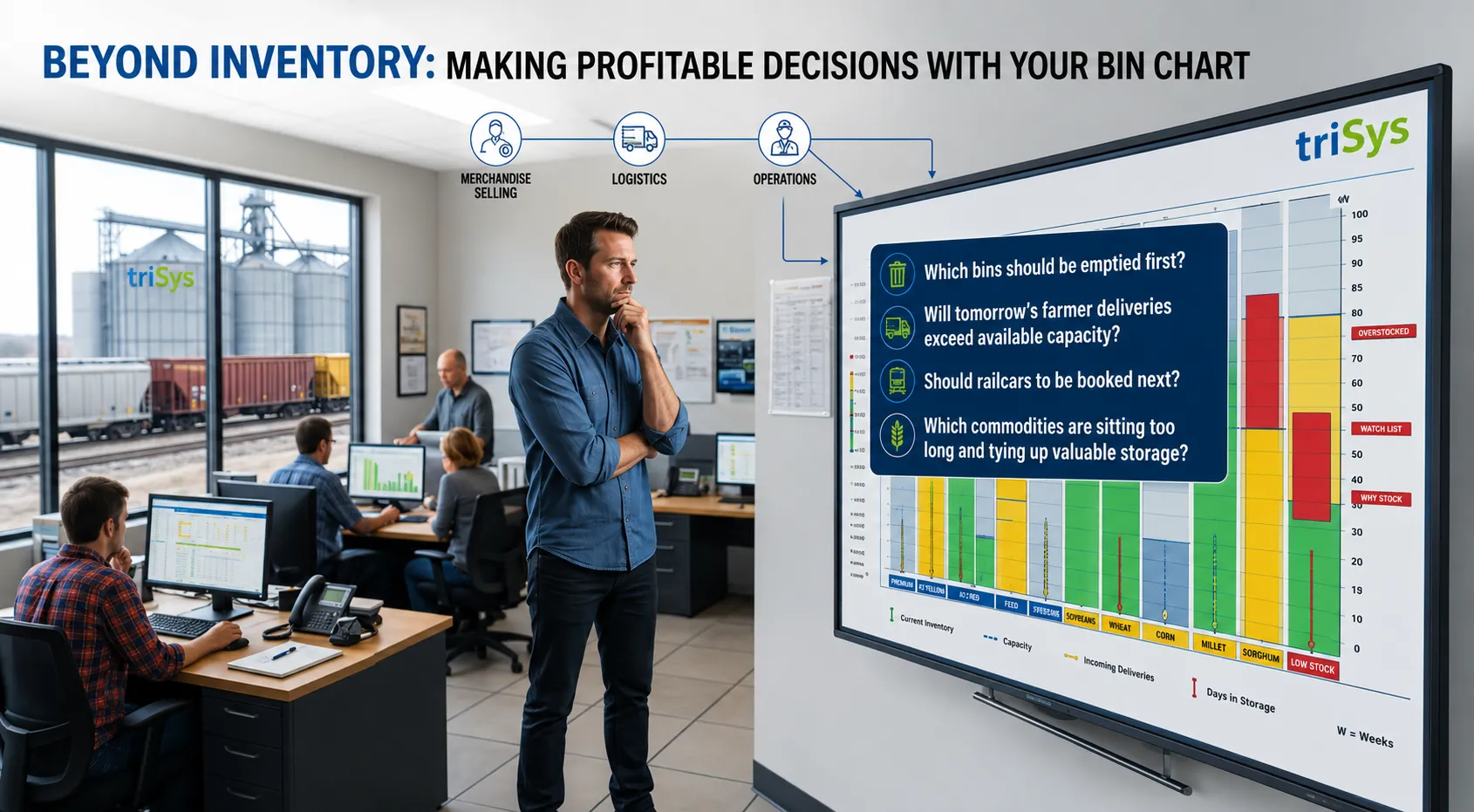
They use it to answer questions that directly impact profitability:
Which bins should be emptied first?
Will tomorrow’s farmer deliveries exceed available capacity?
Is there enough inventory to confidently commit to a new sale?
Should railcars be booked today or next week?
Which commodities are sitting too long and tying up valuable storage?
The answers to these questions determine how efficiently a facility operates and how effectively the business serves its customers.
A modern bin chart should not only show what happened yesterday—it should help predict what needs to happen tomorrow.
Imagine combining current inventory with inbound farmer contracts, outbound shipment commitments, expected railcar arrivals, and storage capacity. Instead of reacting to problems after they occur, teams can anticipate bottlenecks, prepare for harvest peaks, optimize transportation planning, and make commercial decisions with greater confidence.
That is where operational intelligence creates real business value.
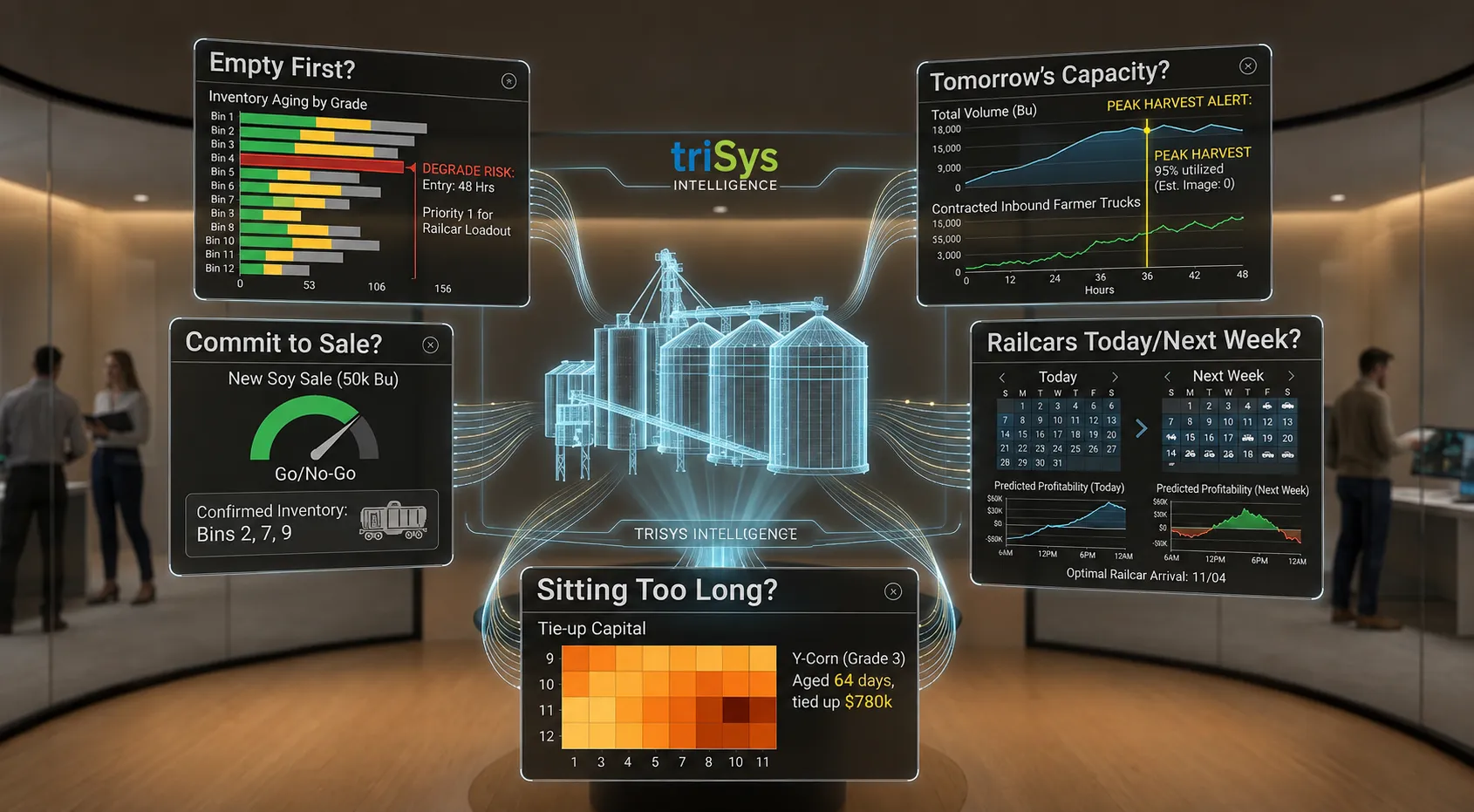
At Trisys, we work with grain companies to transform everyday operational data into meaningful business insights. Rather than viewing the bin chart as a static inventory screen, we help organizations use it as a planning tool that connects merchandising, operations, logistics, and customer commitments. When every team is working from the same reliable picture of inventory, decisions become faster, transportation is better planned, storage is used more efficiently, and customer commitments become easier to meet.
Because in today’s grain business, the companies that perform best aren’t simply the ones that know how much grain they have.
They’re the ones that know what that information allows them to do next.
About TriSys
TriSys IT Services is an AI-powered AgTech and supply chain technology company helping transform grain and commodity operations across the U.S. midstream industry. We bring together AI, automation, and connected data to improve visibility, efficiency, and decision-making across complex supply chain operations.