What an early warning system should show rail and grain operations teams
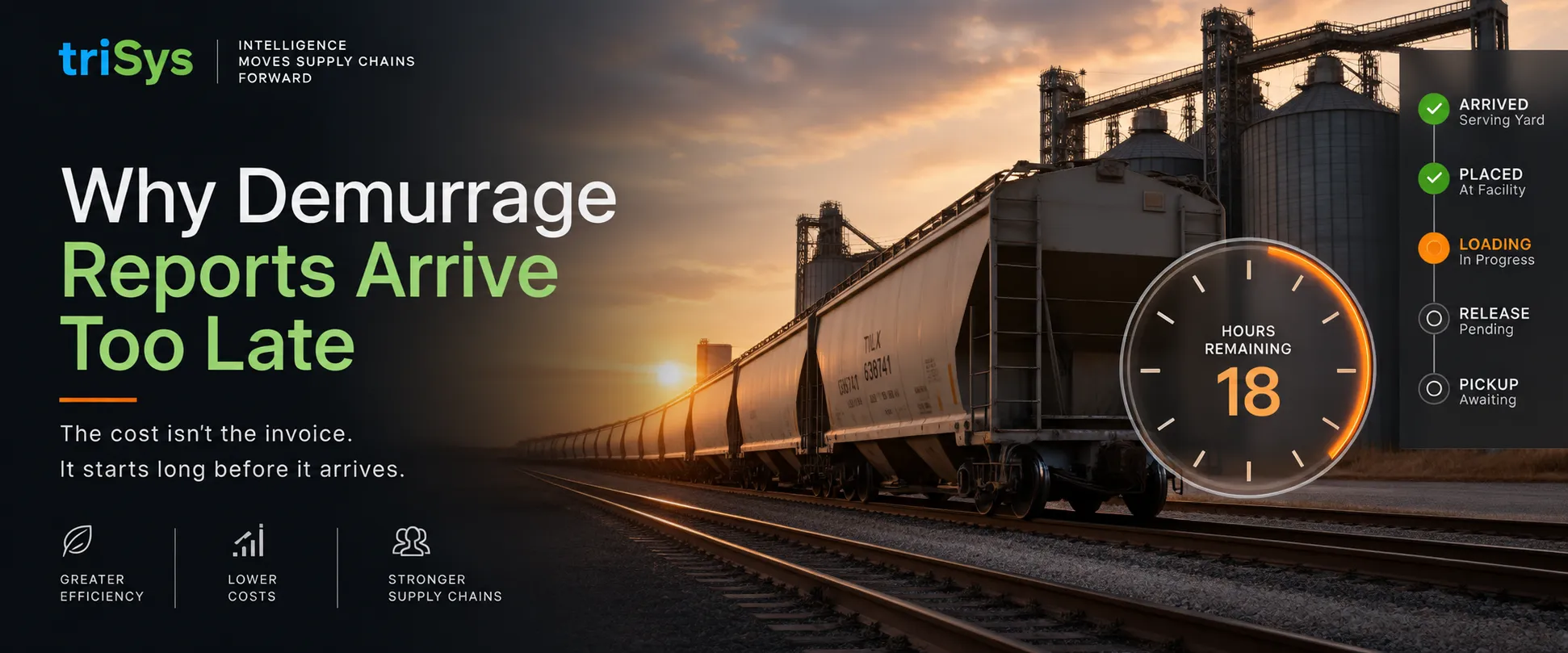
Rail demurrage rarely comes from one dramatic failure, it builds through a sequence of small delays. A demurrage report shows where money was lost, but it can’t recover the hours a railcar spent waiting at a serving yard, sitting after placement, or waiting for loading, release, or pickup.
The more useful question isn’t “how much demurrage did we incur,” but “which cars and locations are moving toward demurrage now, why, and what action can still change the outcome?” That needs a connected operating view spanning the network, the facility, the railcar milestone sequence, the free-time clock, and the people responsible for acting, not just a railroad portal or a periodic spreadsheet.
The limit of retrospective reporting
Most organizations already have rail events, invoices, shipment records, emails, and plant updates, but these signals sit in separate systems with separate owners: one person sees the railroad event, another knows the plant is short of space, a third knows loading has slipped, and finance sees the impact only once an invoice arrives. A retrospective report organizes the result; an early warning system must organize the decision, converting events into an operational state, checking them against free-time rules, and showing where intervention matters most.
Start with the whole network
Demurrage can’t be managed well if users must pick a location before seeing the wider network, that hides comparisons and makes congestion look local even when it’s driven by flow across several facilities. The first screen should show equipment approaching, already at a facility, currently loading, and already loaded or released, preserving the hierarchy from network to cluster to location. Cluster cards make imbalance visible before it becomes demurrage; location cards show whether it’s concentrated at one site or spread across the cluster.
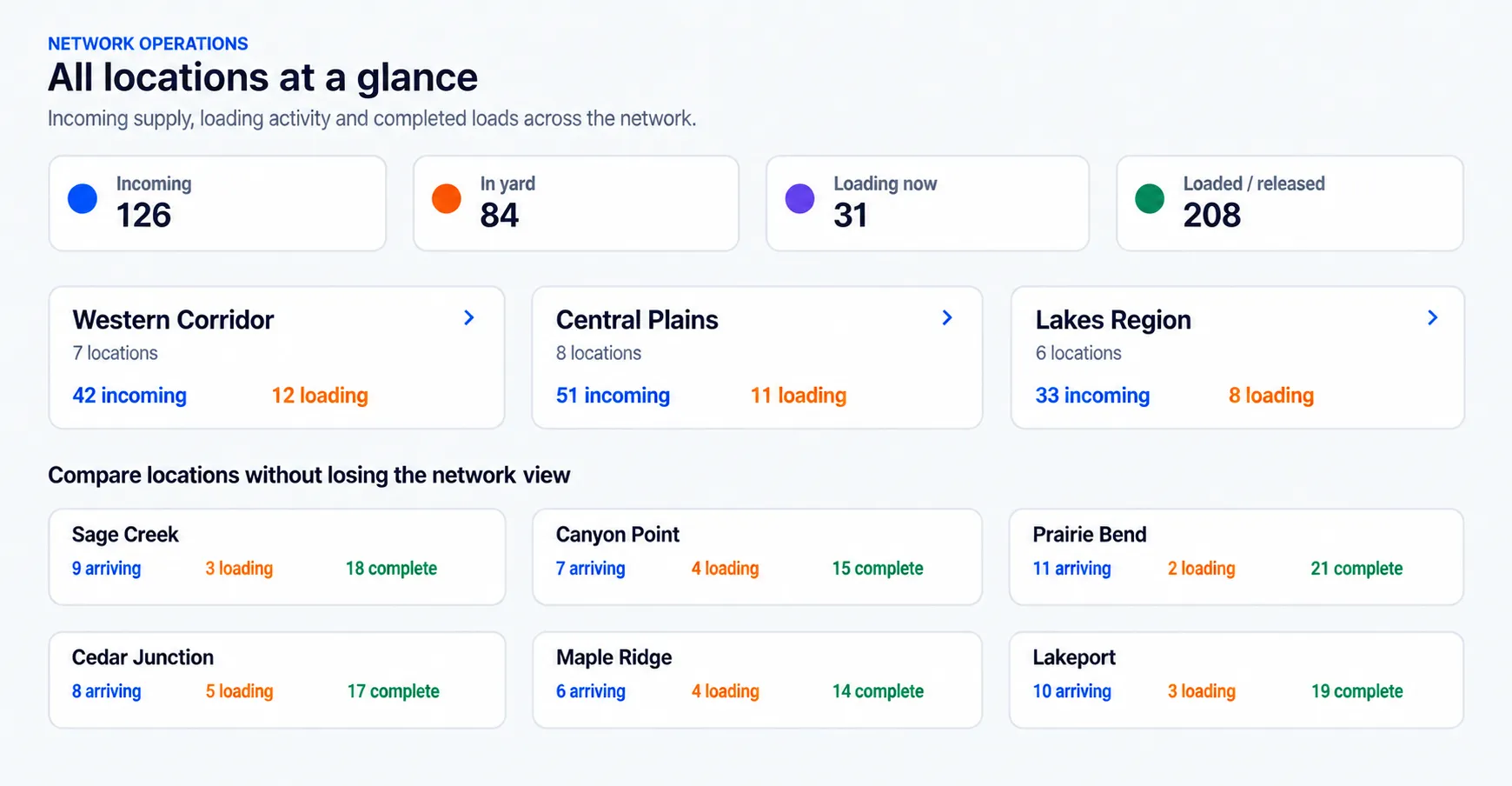
Illustrative network view: portfolio totals, cluster comparisons, and location-level activity in one operating hierarchy.
Translate railroad events into operational meaning
A list of events isn’t yet operational intelligence. Arrival at a serving yard differs from delivery to the facility; constructive placement differs from actual placement, which may start a different clock; loading and release then determine how quickly equipment returns to the railroad. The system must translate each event into the milestone that matters, based on configured location, facility, and tariff logic, distinguishing actual from estimated events.
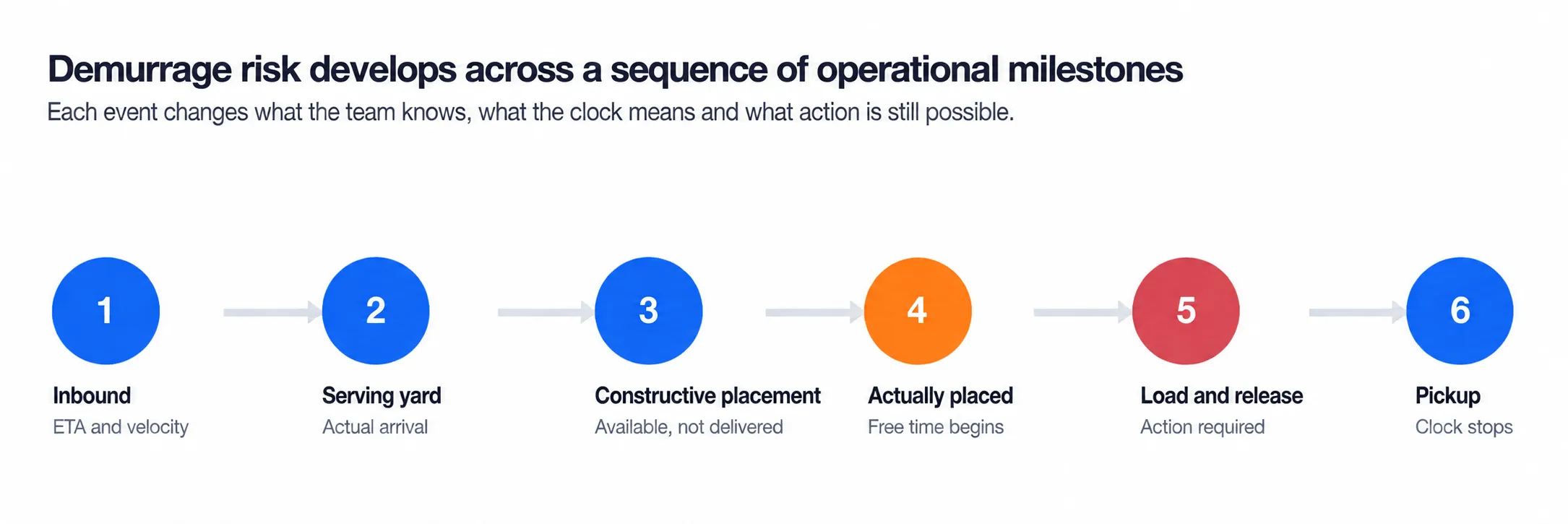
A useful control tower connects the event sequence to the clock and the next available action.
“The practical objective is not to report the last event. It is to identify the next costly event early enough to change the outcome”
What the early warning logic should evaluate
Risk shouldn’t be calculated on elapsed time alone. It should weigh placement state, when free time began, rule exceptions, whether loading or release has started, typical pickup time, and available capacity, resolving into a few categories: demurrage active (free time exceeded, cost accruing), approaching demurrage (inside a configurable warning window, needs an owner), and within free time (no charge forecast, but still visible). The window itself should be configurable, a day for some railcars, an hourly countdown for shuttle or contract detention.
Move from risk to action
Color alone doesn’t prevent cost. Every critical or approaching item should show the next action, the owner, and the cost of waiting, prioritizing cars once placement is recorded, escalating pending pickups, re-sequencing loading when several cars approach one location, and flagging repeated charges at a facility for root-cause analysis. A control tower doesn’t replace the railroad portal, ERP, or existing processes, it connects them into priorities, alerts, and an auditable record. The daily question shifts from “which report should we check” to “which equipment needs attention now.”
Begin with one corridor or cluster
This doesn’t need to start as a network-wide transformation. A practical starting point is one railroad, one cluster, or a small group of high-volume locations: connect available rail events, configure facility and free-time rules, validate milestones with operations, and compare predicted exposure against actual invoices.
That first deployment should answer one question: Can the team act on demurrage risk earlier than today? Once proven, the model can expand further.
About TriSys
TriSys IT Services is an AI-powered AgTech and supply chain technology company helping transform grain and commodity operations across the U.S. midstream industry. We bring together AI, automation, and connected data to improve visibility, efficiency, and decision-making across complex supply chain operations.
Learn more at www.trisysit.com.